

Latch Type Toggle Clamps
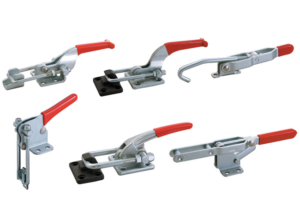
Latch-type toggle clamps—commonly known as pull-action latch clamps or latch hook clamps—are engineered for precision and power. Designed to operate on a horizontal plane or at a 90-degree angle, these clamps effectively pull two components together with maximum security.
Key Advantages & Applications
Because of their low-profile design, these clamps are the go-to choice for projects with strict height restrictions. Their robust hook-action mechanism makes them ideal for:
-
Securing mold cabinet lids and hatches.
-
Quick-release covers and access doors.
-
Industrial sealing and high-pressure enclosures.
Technical Specifications
We offer a versatile range of clamping solutions tailored to your specific industrial needs:
-
High Holding Capacity: Engineered to withstand forces up to 33.4kN.
-
Three Core Designs: Available in Fixed Latch, U-Hook, and J-Hook configurations.
-
Premium Materials: Choose between zinc-plated steel for durability or stainless steel for superior corrosion resistance.
Why Choose Rocheclamp?
Based in China, Rocheclamp is a leading global supplier of professional toggle clamps and accessories. We don’t just move products; we provide reliability. When you partner with us for your pull-latch needs, you get:
-
Uncompromising Quality: Built to exceed international standards.
-
Competitive Pricing: Premium hardware without the premium markup.
-
Fast Delivery: Streamlined logistics to keep your projects on schedule.
Experience the Rocheclamp difference. Contact Us Today to discuss your specifications. We look forward to exceeding your expectations!


CEO Notes
Hey! This is Robin, Roche Industrial Co.,Ltd Product CEO. Thanks to visit our website,and I hope to be a friend with you here. I have over 10 years experience in Handles,I would like to share my experience in this field,and any questions you have about toggle clamps ,I'm happy to help you. I provide free consultant for many clients,and if you need any help on toggle clamps,reach me any time with below button.
Helpful Resources To Know More About Toggle Clamps
The Complete Guide To Latch Type Toggle Clamp
Do you struggle to keep parts securely fastened during assembly or workholding? A Latch Type Toggle Clamp is a mechanical device built for secure and quick clamping. This complete guide will explain how these clamps use toggle action and latching hooks to hold your components tight.
Read on to discover the best ways to use latch type toggle clamps in your projects.
Key Takeaways
- Latch type toggle clamps use a clamp body and latch plate or U-hook to hold components securely. Models like the 4001, 4002, and 4003 offer adjustable holding capacities for different tasks.
- These clamps provide heavy-duty clamping strength with quick release features. They help assemble, fasten, and separate lids, doors, or panels quickly in industrial settings.
- When choosing a clamp, consider material (steel or aluminum), size and dimensions, holding capacity needed for your project, and locking mechanism strength.
- Regular cleaning, lubrication, inspection for worn parts, and safe storage extend clamp lifespan. Replace damaged parts right away to keep performance strong.
- Many industries use latch type toggle clamps for reliable workholding in assembly lines or manufacturing because they improve efficiency and safety during repetitive operations.
Understanding Latch Type Toggle Clamps
Latch type toggle clamps are versatile mechanical devices that effectively pull components together. They consist of a clamp body and a separate latch plate or U-hook. These clamps quickly and efficiently close lids, doors, or panels while ensuring a secure hold.
Different types of hook and latch toggle clamps exist, such as U-bolt and single bolt variations. The actuation method sets them apart. Toggle latches join two or more objects but allow for regular separation when needed.
Many industries rely on these clamping mechanisms for reliable connections in various manufacturing applications.
Different Types of Latch Type Toggle Clamps
Different types of latch type toggle clamps serve various purposes in clamping applications. Each clamp features unique characteristics, making them suitable for specific tasks in manufacturing and assembly.
https://www.youtube.com/watch?v=rGkLAQ0D1II
4001 Toggle Latch Clamp
The 4001 Toggle Latch Clamp is a reliable tool in mechanical design and clamping applications. This clamp effectively pulls components together, ensuring a secure hold. It features a robust clamp body that works with a latch plate or U-hook.
Users appreciate its quick release function, which allows for easy operation when assembling or disassembling parts.
This toggle latch clamp offers heavy-duty clamping capabilities. Its adjustable holding capacity accommodates various sizes and weights of materials. The well-designed locking mechanism ensures safety during use, making it ideal for manufacturing tasks.
Many professionals in the industry trust this clamp for efficient assembly connections due to its versatility and performance in securing doors and panels securely.
4002 Toggle Latch Clamp
The 4002 Toggle Latch Clamp serves as a reliable fastening tool for various applications. It consists of a clamp body paired with a separate latch plate or U-hook. This toggle clamp effectively pulls components together, ensuring a secure hold.
Users appreciate its quick-release function, which allows for efficient operation and easy access.
Many industrial settings utilize the 4002 model because it offers adjustable holding capacity. Workers can easily adapt it to fit different sizes and dimensions of objects. The strong locking mechanism guarantees stability during use, making it suitable for heavy-duty clamping tasks.
Overall, this latch type toggle clamp stands out in manufacturing and assembly environments due to its versatility and effectiveness.
4003 Toggle Latch Clamp
The 4003 toggle latch clamp serves as a strong fastening tool. It pulls components together effectively. This mechanical device operates using a toggle action, ensuring a secure hold for various applications.
Users can rely on its adjustable holding capacity to suit different tasks.
With its unique design, this clamp includes a clamp body and a separate latch plate or U-hook. Many use it in manufacturing and assembly processes for closing lids, doors, and panels quickly and efficiently.
Latch type clamps like the 4003 provide a reliable connection that allows regular separation of joined parts while maintaining tension when needed.
Benefits and Uses of Latch Type Toggle Clamps
Latch type toggle clamps offer heavy-duty clamping, quick release features, and adjustable holding capacities that make them ideal for various applications. These tools help secure workpieces during assembly or manufacturing processes.
Their reliability ensures a strong connection while maintaining tension throughout the operation. Explore how these clamps can improve your projects and enhance efficiency in your workspace.
Heavy Duty Clamping
Heavy-duty clamping is crucial in many industrial applications. Latch type toggle clamps provide this strong hold. They securely pull components together, ensuring stability during operations.
These clamps can handle large forces without failing. Users benefit from their ability to maintain tension over extended periods.
In my experience with industrial hardware, I have seen the value of these clamps firsthand. Their quick-release function allows for efficient workflow changes while maintaining a secure hold on parts.
Toggle latches are versatile mechanical fasteners that close and fasten items quickly and efficiently, making them a reliable choice for manufacturing tasks. With adjustable holding capacity, they accommodate various sizes and weights effectively, proving essential in both assembly lines and workshops alike.
Quick Release Function
The quick release function of latch type toggle clamps makes them extremely efficient. This feature allows users to open and close the clamps swiftly. With a simple motion, operators can separate or join components securely.
Toggle latches provide a seamless clamping experience for panels, lids, and doors.
Users appreciate this mechanism because it saves time during assembly and disassembly. The design features a clamp body connected to a latch plate or U-hook that enables easy operation.
Fastening becomes straightforward with these mechanical devices while maintaining strong tension on the objects involved. This quick release function is essential in many manufacturing processes where speed matters.
Adjustable Holding Capacity
Adjustable holding capacity defines the versatility of latch type toggle clamps. These clamps allow users to modify clamping strength based on their needs. They can securely hold different sizes and shapes of objects while ensuring a tight connection.
Users appreciate this flexibility during manufacturing or assembly tasks.
Latch type toggle clamps also feature various actuation methods, including U-bolt and single bolt designs. This adaptability ensures they can handle a wide range of applications, from closing doors to fastening panels efficiently.
A reliable clamp with adjustable holding capacity enhances productivity in any mechanical setting.
Factors to Consider When Choosing a Latch Type Toggle Clamp
When choosing a latch type toggle clamp, consider factors like material and holding capacity. Size and locking mechanism also play crucial roles in ensuring effective clamping for your needs.
Material
Latch type toggle clamps use various materials for different applications. Steel and aluminum are common choices due to their strength and durability. A steel clamp provides a secure hold, making it ideal for heavy-duty clamping tasks.
Aluminum offers lightweight options while maintaining good holding capacity.
The latch plate or U-hook is often made from high-quality materials to ensure reliable performance. Many toggle latches also feature protective coatings that prevent rust and corrosion.
Choosing the right material affects the clamp’s effectiveness in assembly and manufacturing processes, ensuring a strong connection between components.
Holding Capacity
Holding capacity plays a crucial role in Latch Type Toggle Clamps. These clamps securely hold objects together under significant tension. Depending on the model, their holding capacity can vary widely.
For example, heavy-duty latches can manage more weight than standard options.
Using a toggle latch allows you to pull components tightly together while maintaining stability during use. Many professionals rely on these clamps for secure assembly and manufacturing tasks.
They appreciate how readily available adjustable clamps offer precise control over clamping pressure and safety features like locking mechanisms that reinforce the secure hold when needed.
Size and Dimensions
Size and dimensions play a crucial role in choosing latch type toggle clamps. These clamps come in various sizes to suit different applications. A larger clamp may offer greater holding capacity, which is essential for heavy-duty tasks.
Smaller clamps are suitable for light assemblies where space is limited.
Manufacturers design latch type toggle clamps with specific dimensions to ensure compatibility with various projects. The size affects how well the clamp can secure an object or surface panel.
Proper measurements guarantee a secure hold during assembly and connection processes. Always consider both size and holding capacity when selecting the right clamp for your needs.
Locking Mechanism
Latch type toggle clamps rely on effective locking mechanisms to ensure a secure hold. They use various methods of actuation, including U-bolt and Single Bolt designs. The chosen method impacts how the clamp fastens objects together.
Users often find that toggle latches work efficiently to close lids, doors, and panels.
The latch plate or U-hook plays a vital role in securing connections. This setup allows users to join two or more components while enabling easy separation when needed. A well-functioning locking mechanism offers quick release, making assembly tasks smoother.
Latch type clamps excel in heavy-duty applications due to their strength and reliability in maintaining tension during use.
Maintenance and Care for Latch Type Toggle Clamps
Regular cleaning and lubrication keep your latch type toggle clamps in top shape. Inspect them often for worn parts and replace them when necessary. Store these tools safely to prevent damage.
Address common issues quickly to maintain their effectiveness. Explore further maintenance tips to ensure longevity!
Proper Cleaning and Lubrication
Cleaning and lubricating latch type toggle clamps enhances their performance. Use a soft cloth to wipe away dirt, dust, and grime. Ensure the clamp body is free of debris that could interfere with its function.
After cleaning, apply a light lubricant to moving parts. This prevents rust and allows smooth operation.
Inspecting your toggle clamps regularly will also help identify wear or damage early on. Replace worn parts promptly for safety and reliability. Proper maintenance ensures strong clamping action when you secure objects together.
A well-maintained latch type clamp provides a reliable hold during assembly or manufacturing processes.
Inspection and Replacement of Worn Parts
Inspect latch type toggle clamps regularly to ensure they function properly. Look for signs of wear on the clamp body and the latch plate or U-hook. Replace any worn parts immediately to maintain a secure hold during clamping.
Worn components can affect the locking mechanism’s performance. If you notice difficulty in closing or opening, check for damage. Replacing these parts helps prevent failures during operations involving heavy-duty clamping or quick release functions.
Regular maintenance keeps your toggle clamps reliable and extends their lifespan in manufacturing settings.
Safe and Proper Storage
Store latch type toggle clamps in a dry, cool place. Proper storage prevents rust and deterioration. Keep them away from moisture and extreme temperatures. Use bins or drawers to organize different types of clamps.
Label each container for easy access.
Regularly check your stored clamps for signs of wear or damage. Inspect the locking mechanism and clamp body during these checks. Replace any worn parts promptly to maintain functionality.
Safe and proper storage ensures reliable use in clamping, manufacturing, and assembly tasks every time you need them.
Troubleshooting Common Issues
Latch type toggle clamps may face common issues that affect their performance. Inspect the clamp for any signs of wear or damage. A worn-out latch plate can lead to weak connections and insecure holds.
Check the locking mechanism; it should engage smoothly without resistance. If clamping becomes difficult, clean and lubricate moving parts regularly to maintain proper functionality.
Occasionally, users encounter misalignment between components. Ensure that both surfaces are level before using the clamp for secure fastening. Adjust the tension if necessary; this helps achieve a strong hold on objects during assembly.
Address these concerns promptly to prolong the life of your mechanical fasteners and ensure effective clamping in your projects.
Conclusion
Latch type toggle clamps offer reliability and versatility. These tools help secure connections in various applications. Their design ensures quick fastening and easy release. When you choose the right clamp, you can improve efficiency in your projects.
Invest in quality clamps to enhance your assembly process today.
FAQs
1. What is a latch type toggle clamp and how does it work?
A latch type toggle clamp is a mechanical fastener that uses a locking mechanism to hold items together. It connects two parts using a hook or Uhook and applies tension for a secure assembly.
2. Where are latch type toggle clamps used in manufacturing?
Manufacturing often relies on these clamps for precise tooling, clamping, and assembly tasks. They help keep connections tight during production or maintenance.
3. How do you ensure a secure hold with this clamping device?
You achieve a secure hold by engaging the hook or Uhook into the latch plate then activating the locking mechanism; this creates strong tension between surfaces.
4. Why are these fasteners important in precision engineering?
Latch type toggle clamps provide reliable latching and consistent connection points; they allow engineers to repeat setups without losing alignment or security.
5. What makes them different from other fastening tools?
Unlike standard fasteners, these clamps combine quick operation with mechanical advantage; their design locks components tightly while allowing easy release when needed.
